


Welcome! 欢迎!
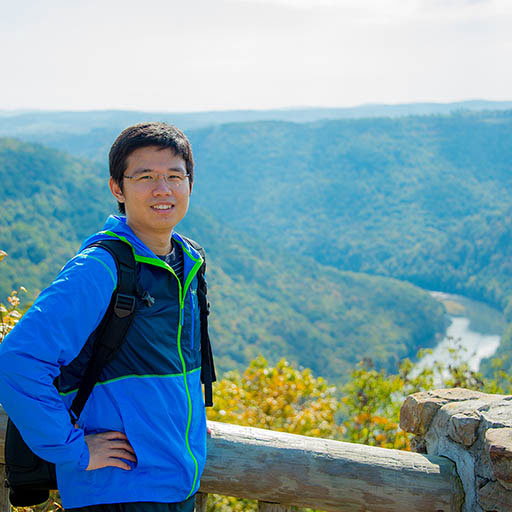
Welcome to Haofan Zheng's Personal Website!
Welcome to Haofan Zheng's Personal Website!
I am a software engineer and computer scientist specializing in secure, privacy-preserving, and large-scale distributed systems. I received my Ph.D. in Computer Science from the University of California, Santa Cruz, where my research focused on trusted computing, Trusted Execution Environments (TEEs), decentralized systems, and blockchain.
My doctoral research explored how TEEs and decentralized infrastructure can be combined to improve the confidentiality, integrity, and availability of distributed applications. My work includes the Decent framework for secure enclave-based applications, techniques for detecting eclipse attacks from inside TEEs, and Decentagram, a highly available decentralized publish/subscribe system. Decentagram received a Distinguished Artifact Award at IEEE/IFIP DSN 2024.
I currently work on backend and infrastructure systems with an emphasis on privacy, data protection, and reliability at scale. My broader interests include trusted computing, remote attestation, distributed systems, cloud infrastructure, and practical mechanisms for protecting sensitive data in large-scale services.
Previously, I received my Bachelor’s degree in Computer Science, summa cum laude, from West Virginia University.
| Graduate Student Researcher | 2017 - 2024 |

My doctoral research focused on trusted computing, trusted execution environments (TEEs), secure distributed systems, and blockchain. I studied how decentralized applications can use hardware-backed trusted execution to improve confidentiality, integrity, and availability while reducing reliance on centralized trust.
My work included the Decent framework for building mutually attested enclave-based distributed applications, techniques for detecting eclipse attacks from inside TEEs, and Decentagram, a highly available decentralized publish/subscribe system for on-chain and off-chain applications. Decentagram received a Distinguished Artifact Award at IEEE/IFIP DSN 2024.
I also developed research prototypes and evaluation infrastructure using technologies including Intel SGX, remote attestation, smart contracts, and distributed systems, and presented this work at academic conferences and workshops.
My dissertation is available through UC eScholarship, and a recording of my dissertation defense is available on YouTube.
| Foundations of Programming Languages | Fall, 2024 | |
| Programming Abstractions: Python | Summer, 2024 | |
| Programming Languages | Spring, 2024 | |
| Applied Discrete Mathematics | Winter, 2024 | |
| Foundations of Programming Languages | Fall, 2023 | |
| Programming Abstractions: Python | Winter, 2023 | |
| Programming Abstractions: Python | Spring, 2022 | |
| Advanced Programming | Spring, 2021 | |
| Advanced Programming | Fall, 2017 |
I served as a Teaching Assistant for undergraduate and graduate computer science courses covering programming languages, functional programming, data structures and algorithms, discrete mathematics, and programming language theory. Course topics included C++, Python, Haskell, functional programming, object-oriented programming, graph algorithms, lambda calculus, type systems, propositional and predicate logic, data analysis and visualization with NumPy, pandas, and Matplotlib, and formal proofs using Coq.
My responsibilities included leading discussion and laboratory sessions, holding office hours, assisting students with programming assignments and course material, grading assignments and exams, and proctoring exams.
| software Engineer, Undergraduate Research Assistance | 2015 - 2017 |

I worked as an Undergraduate Research Assistant at West Virginia University and was one of the early engineers on syGlass, a scientific virtual reality platform for visualizing and analyzing microscopy data using head-mounted displays.
I developed modules for graphics, user interaction, multiplayer functionality, virtual reality, and voice recognition. More information about syGlass is available at syglass.io, and a related paper is available on arXiv.
| software Engineer Intern | Summer, 2021 |

I designed and implemented remote attestation (RA) mechanisms for Intel SGX (Ice Lake) applications and AMD SEV (Secure Encrypted Virtualization) virtual machines. I also enhanced and hardened the Linux kernel and SEV-Tool for SEV hosts and guests, and implemented patches for Intel's DCAP library.
| software Engineer Intern | Summer, 2020 |

I researched and developed remote attestation (RA) mechanisms for AMD SEV (Secure Encrypted Virtualization) virtual machines. I enhanced and hardened Secure Boot, the Linux kernel, QEMU, and OVMF for SEV hosts and guests to meet the SEV enclave threat model.
Besides studying and doing research, I also have many hobbies, such as cooking, biking, traveling, and photographing.
The background pictures you see here are all taken by me.
© Haofan Zheng 2026
Powered by HTML 5 & CSS 3 and HTML5 UP